Searching for a Gasfitter Gold Coast homeowners can actually rely on usually starts with a simple question: is a gas fitter even different from a plumber, or can any tradesperson touch a gas line? It’s a fair question, and the answer matters more than most people realise. Gas work is one of the few trades in Australia where getting the wrong person on the job isn’t just a quality issue, it’s a legal and safety one.
This guide breaks down exactly what a gas fitter does, how the trade differs from general plumbing, and when you need to make sure the person turning up to your property is properly licensed for the job in front of them.
What Does a Gas Fitter Do?
A gas fitter is a licensed tradesperson who installs, connects, maintains, and repairs gas appliances and gas pipework, working with both natural gas and LPG. Their day-to-day work typically includes:
- Connecting gas cooktops, ovens, and hot water systems
- Installing and relocating gas points, including outdoor BBQ outlets
- Running new gas lines during renovations or new builds
- Detecting and repairing gas leaks
- Servicing gas heaters and gas hot water systems
- Converting appliances between natural gas and LPG
- Testing pipework and issuing compliance certificates once work is complete
Every one of these tasks falls under strict Australian Standards, primarily AS/NZS 5601, and every job requires the fitter to test the system and provide compliance documentation before they leave.
What Is Gas Fitting, Exactly?
Gas fitting is the trade discipline covering the design, installation, alteration, and repair of gas supply systems and gas appliances. It sits alongside plumbing as a separate regulated trade, which is why it requires its own licence or endorsement in every Australian state, rather than being an automatic extension of a general plumbing qualification.
Is a Gas Fitter the Same as a Plumber?
No, not automatically. This is where most of the confusion comes from, and it’s worth understanding clearly. General plumbing covers water supply, drainage, sanitary systems, stormwater, and roofing. Gas fitting is treated as a distinct licensed discipline in every state, meaning a standard plumbing licence does not, on its own, authorise someone to work on a gas system.
Plenty of tradespeople hold both qualifications, and in practice, many businesses market themselves as a combined Gold Coast plumber and gas fitting service, since the two trades overlap so often on the same job site. But holding one licence never guarantees the other. A fully qualified plumber without a gas endorsement is legally required to bring in a licensed gas fitter for anything involving the gas supply, and vice versa.
Can Every Plumber Work on Gas?
No. This is the single most important thing to understand before booking a tradesperson for gas work. A plumber must hold a specific gasfitting licence, endorsement, or authorisation on top of their plumbing licence before they can legally touch a gas installation. Without it, any gas work they carry out is unlicensed, regardless of how experienced they are as a plumber.
State by state, the requirement looks like this:
- Queensland: requires a Gas Work Licence issued through the QBCC, alongside a Gas Work Authorisation from Resources Safety and Health Queensland (RSHQ) for certain work
- New South Wales: gasfitting is a distinct category under the combined Plumbing, Drainage and Gasfitting Licence
- Victoria: requires a gasfitting-endorsed plumbing licence issued through the Victorian Building Authority (VBA), with separate Class A and Class B authorisations depending on the appliance type
- Western Australia: requires a Gasfitting Permit, with different permit classes depending on the scale of the installation
If a tradesperson can’t produce a current gasfitting licence or endorsement specific to your state, they are not legally permitted to carry out gas work on your property.
What Is a Gas Plumber?
“Gas plumber” is simply the common term for a plumber who also holds a gasfitting licence or endorsement, allowing them to legally perform both plumbing and gas work. Many trades businesses use “gas plumber” and “gas fitter” interchangeably in their marketing, but the licence itself is what actually matters, not the job title on the van.
When Should I Call a Gas Fitter?
Call a licensed gas fitter for any job involving your gas supply, appliances, or pipework, including:
- Installing or connecting a new gas appliance
- Running a new gas line for a renovation or extension
- Relocating an existing gas point
- Suspected gas leaks or a smell of gas
- Servicing or repairing a gas heater or gas hot water system
- Converting an appliance between natural gas and LPG
- Any work that will need a compliance certificate issued afterward
If in doubt, ask directly whether the job requires a gasfitting licence before you book. A reputable business will tell you plainly, rather than leave it ambiguous.
Can Gas Fitters Install Appliances?
Yes. Installing and connecting gas appliances, cooktops, ovens, heaters, and hot water systems, is one of the most common jobs a gas fitter carries out. This includes running any necessary pipework to the appliance, connecting it correctly, pressure testing the installation, and issuing the compliance certificate confirming the work meets Australian Standards.
Can Gas Fitters Repair Gas Leaks?
Yes, and this is work that must only be done by a licensed gas fitter. Attempting to locate or repair a gas leak without a licence is illegal in every Australian state, in addition to being genuinely dangerous. If you smell gas, leave the property immediately, avoid using any light switches or electrical equipment, and contact your gas network provider’s emergency line before calling a gas fitter for the repair itself.
Can Gas Fitters Work on LPG?
Yes. Licensed gas fitters are qualified to work on both natural gas and LPG systems, including bottled gas setups. This covers connecting LPG bottles and regulators, converting appliances between fuel types, and installing or servicing LPG-fed appliances. The same licensing and compliance requirements apply regardless of which gas type is involved.
How Do I Check Whether a Gas Fitter Is Licensed?
Before any gas work begins, it’s reasonable and expected to ask for proof of licensing. You can:
- Ask to see their current gasfitting licence, endorsement, or authorisation card
- Check the licence number against your state’s regulator (QBCC in Queensland, Building Commission in NSW, VBA in Victoria, or the relevant body in your state)
- Confirm the licence covers the specific type of work you need, since some permits are limited by appliance type or gas load
- Ask whether a compliance certificate will be issued once the job is complete, since only a licensed gas fitter can legally issue one
A gas fitter who is reluctant to confirm their licensing details is a clear warning sign, and not someone who should be working on your gas supply.
What Qualifications Does a Gas Fitter Need?
Gas fitters generally complete a Certificate III in Gas Fitting through a registered training organisation, alongside the plumbing qualifications most gas fitters also hold. From there, they apply for the specific state licence or endorsement covering gas work, which typically needs renewing every one to three years depending on the state. Ongoing requirements usually include appropriate insurance and adherence to AS/NZS 5601 on every job.
Need a Licensed Gasfitter Gold Coast Homeowners Trust?
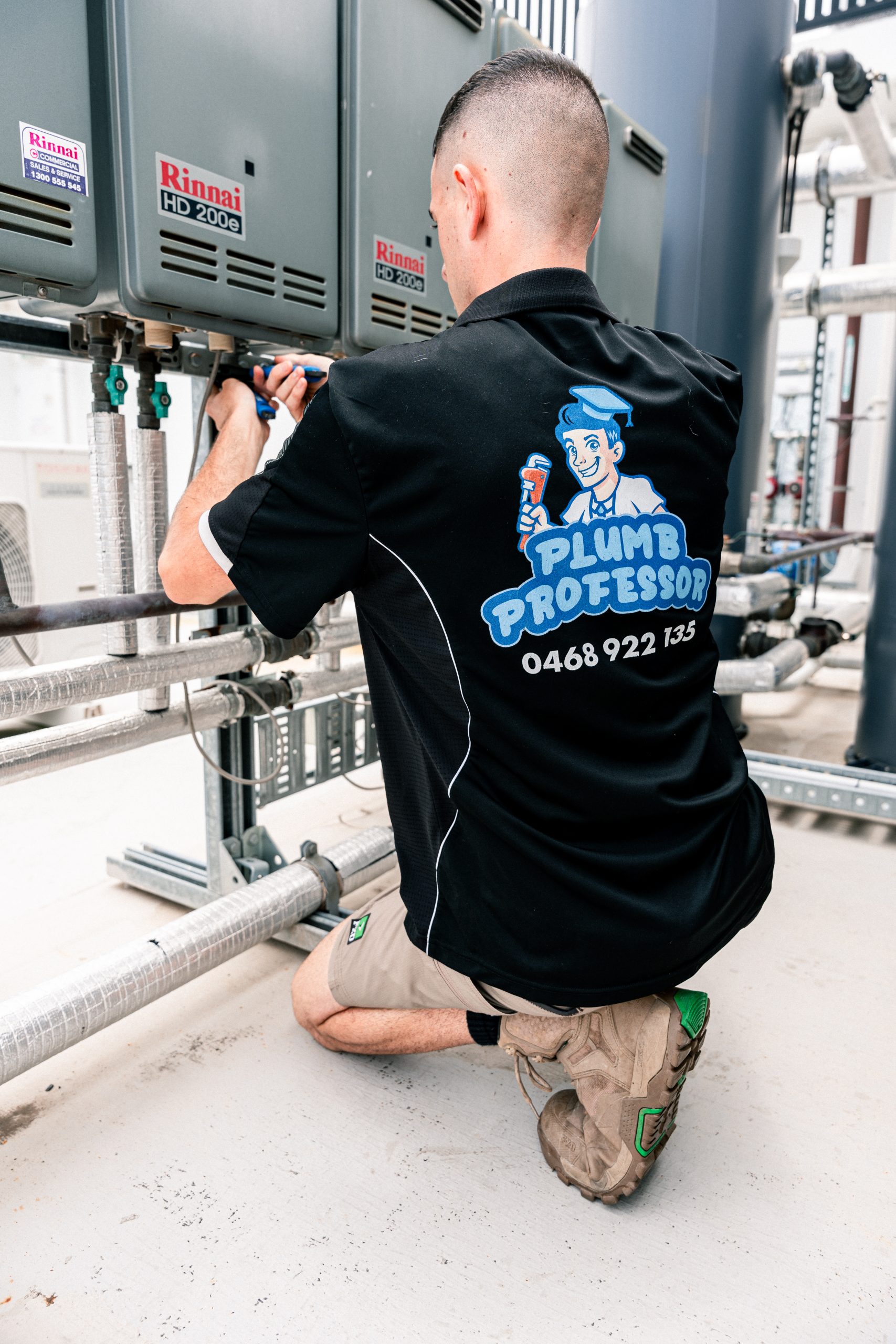
Plumb Professor is a family-owned, fully licensed plumbing and gas fitting business based on the Gold Coast. Our team holds current licensing for both plumbing and gas work, so whether your job needs a Gold Coast plumber, a gas fitter, or both on the same visit, you are covered by one trusted local team. Every gas job comes with upfront pricing, a $0 call-out fee, and the compliance certificate you are legally entitled to.
Call 07 5551 5954 or get in touch online to book a licensed gas fitter or plumber on the Gold Coast today.