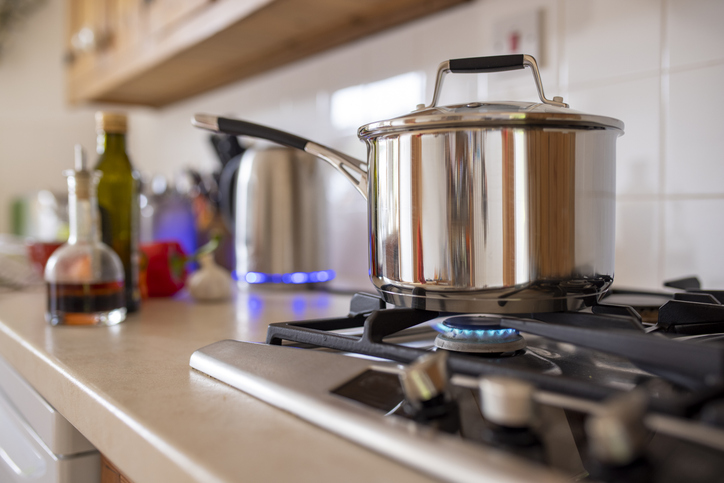
Swapping an old gas cooktop for a new one sounds like a straightforward job, and in a lot of cases it is, but there are more requirements involved than most homeowners expect before the new appliance is legally allowed to fire up. If you’re planning a Gas Cooktop Installation Gold Coast kitchens actually pass compliance on, this guide covers real 2026 pricing, the clearance and ventilation rules a licensed fitter has to check, and the common questions that come up around renovations, electric-to-gas switches, and imported appliances.
Whether you’re doing a like-for-like swap or installing a cooktop where one has never existed, the process is more regulated than it looks, which is exactly why it needs to go through a licensed gas fitter rather than a general handyman or a DIY afternoon.
Who Can Install a Gas Cooktop?
Only a licensed gas fitter. This applies to every gas cooktop installation, including a straightforward like-for-like replacement of an identical model. The work involves disconnecting and reconnecting a live gas supply, leak testing the new connection, and confirming the appliance meets Australian Standard AS/NZS 5601, all of which legally require a gasfitting licence. A general plumber without a gas endorsement, an electrician, or a kitchen installer cannot legally carry out this part of the job.
How Much Does Installation Cost?
Pricing depends heavily on whether you already have an existing gas line in place:
- Like-for-like replacement with an existing gas connection: roughly $260 to $480
- New gas point installation for a kitchen converting from electric to gas: roughly $480 to $820
- Gas line upgrade, if your existing line is undersized for the new cooktop’s demand: an additional $200 to $600
- Premium or European range cookers with multiple valves and higher gas demand: $800 to $1,400 for the gas connection alone
Every quote should include the compliance certificate as standard, not as an add-on. If a quote looks unusually low, it’s worth confirming the certificate and leak testing are actually included before booking.
Can I Install a Gas Cooktop Myself?
No. This is regulated gas work in every Australian state, and it carries the same licensing requirement as any other gas fitting job, regardless of how simple the swap looks or whether you’re confident following the manufacturer’s instructions yourself. Attempting it yourself is illegal, can void your home insurance if something goes wrong, and skips the pressure testing and compliance certification that confirm the connection is actually safe.
Can I Replace a Cooktop Like-for-Like?
Yes, but a licensed gas fitter still needs to carry out the swap, even when the new cooktop is the exact same model as the old one. The reason is straightforward: every installation involves disconnecting and reconnecting the gas supply, leak testing the new connection, and confirming the appliance is properly fitted. None of that changes just because the appliance itself is identical.
How Long Does Installation Take?
A straightforward like-for-like swap with an existing gas connection typically takes one to two hours. Installing a new gas point for a kitchen previously running on electric takes longer, generally half a day, depending on how far the new line needs to run and how accessible the space is between the meter and the kitchen. Premium range cookers with multiple gas valves and higher demand can take longer again due to additional commissioning and testing.
Do I Need a New Gas Line?
Only if you’re converting a kitchen that previously ran on electric, or if your existing line is undersized for the new cooktop’s gas demand. A Gold Coast Gasfitter will check the size and condition of your existing line as part of the quote, since some premium or larger cooktops draw more gas than a standard existing connection was sized for, which means a line upgrade is needed before the new appliance can be safely connected.
Can I Replace Electric With Gas?
Yes, provided a gas supply is available to the property and a new gas line and point are installed. This is treated as a full new gas point installation rather than a simple appliance swap, since there’s no existing gas infrastructure at the cooktop location to reconnect to. Costs sit at the higher end of the range as a result, and the job typically takes longer since new pipework needs to be run from the meter or an existing gas point through to the kitchen.
Can I Disconnect the Old Cooktop Myself?
No. Disconnecting a gas appliance is regulated gas work in exactly the same way as connecting one. Even though it feels like the lower-risk direction, an incorrectly disconnected line can leave a fitting open to leaks, and it still requires a licensed gas fitter to safely cap or disconnect the old connection.
Do Gas Cooktops Need Ventilation?
Yes. AS/NZS 5601 requires either a rangehood ducted to the outside or sufficient passive ventilation in the kitchen for any gas cooktop installation. This becomes a genuine consideration in apartments and townhouses that rely on recirculating rangehoods with carbon filters only and no external duct, since these technically don’t satisfy the ventilation requirement on their own. In many cases the installation can still proceed if alternative ventilation exists, such as an open-plan layout connecting to a ventilated space or large openable windows, but a licensed fitter needs to assess and document this as part of the job.
What Clearances Are Required?
AS/NZS 5601 sets out minimum clearances that apply regardless of appliance brand:
- 600mm vertical clearance from the cooktop burner to any combustible surface above it (650mm for new installations, measured to the underside of a rangehood)
- 200mm horizontal clearance to a vertical combustible surface
- 600mm clearance to a rangehood, or 750mm to an exhaust fan
- 50mm clearance from the front edge of the benchtop to the cooktop cut-out
- 100mm clearance between the underside of the benchtop and the in-bench safety barrier
If any of these clearances can’t be met, a non-combustible material can sometimes be applied to the surface as an alternative, but this needs to be assessed and documented by the installing fitter rather than assumed.
Can LPG Cooktops Run on Natural Gas?
Not without conversion. LPG and natural gas run at different pressures and require different injectors within the appliance, so a cooktop built for one gas type cannot simply be connected to the other. Many cooktops are convertible between the two with a conversion kit, but this needs to be carried out by a licensed gas fitter as part of the installation, and it must match what the appliance manufacturer supports for that specific model.
Do I Need a Compliance Certificate?
Yes, for every gas cooktop installation without exception, including like-for-like replacements. The certificate confirms the work meets AS/NZS 5601 and has been leak tested, and it’s a legal requirement your fitter must provide once the job is complete. Some gas retailers can refuse to continue supplying gas to a property without valid compliance documentation on file, so it’s worth keeping a copy for your own records regardless.
Can a Gasfitter Install an Imported Cooktop?
In most cases, yes, but it needs checking before the job is booked, not after the appliance arrives. Imported cooktops, particularly European range cookers, sometimes use different gas connection types, injector sizes, or clearance requirements than locally sold appliances, and they need to be certified to Australian standards to be legally installed and connected. Send your fitter the appliance’s spec sheet at quote stage so they can confirm the connection type, injector compatibility, and clearances before the installation date, rather than discovering an issue on the day.
Can an Old Gas Cooktop Simply Be Replaced?
Generally yes, provided the existing gas line and connection are in good condition and appropriately sized for the new appliance. Where issues come up, they’re usually in older homes, and can include an undersized gas line for a higher-output new cooktop, ageing pipework that needs attention, or ventilation that no longer meets current standards following a kitchen renovation. A licensed fitter will flag any of these during the quote or on the day, rather than these things simply being assumed fine because the old cooktop worked without issue for years.
Book Gas Cooktop Installation Gold Coast Homeowners Trust
Plumb Professor handles gas cooktop installations across the Gold Coast, from straightforward like-for-like swaps to full electric-to-gas conversions and premium imported appliances. Every job includes upfront pricing, a $0 call-out fee, and the compliance certificate you’re legally entitled to once the work is done.
Call 07 5551 5954 or get in touch online to book your gas cooktop installation on the Gold Coast.